
The Man Behind the Mask: A Conversation with Rey Fénix
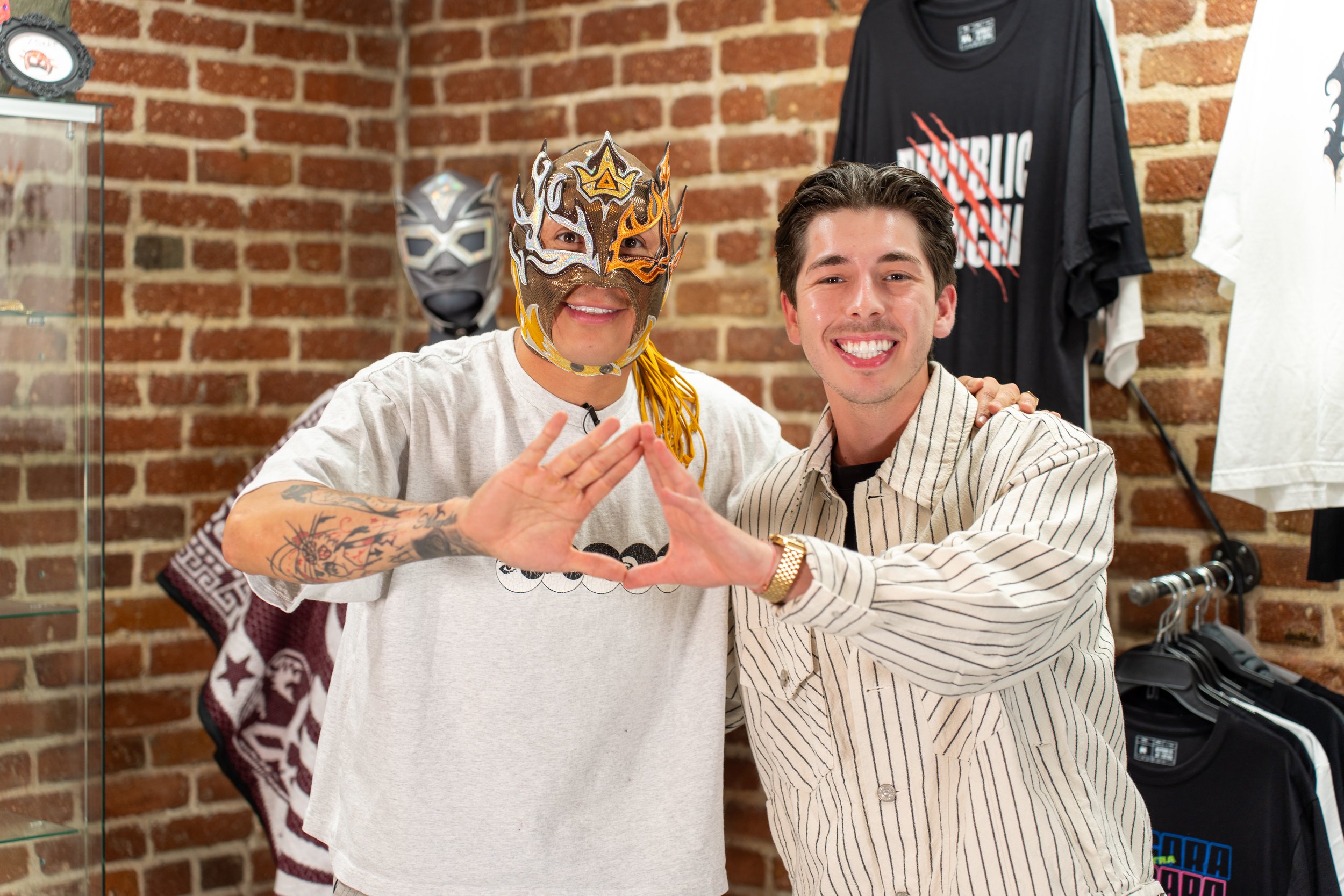
There are certain people whose stories feel larger than the world they come from. Not because of fame or championships, but because of what they represent to the people watching them.
With Rey Fénix, what you see inside the ring—fearless, gravity-defying, almost unreal—is only part of the story.
Behind the mask is someone whose life has been shaped by sacrifice, family, culture, and an unwavering belief in a dream that once felt impossibly far away.
And in speaking with him, one thing becomes clear almost immediately:
“La lucha libre es cultura, es tradición, es como una religión.”
For Rey, lucha libre has never been just entertainment. It’s identity. It’s history passed down through generations. It’s emotion. Community. Survival.
It’s something people carry with them.
Two Brothers Selling Masks
That brother is now known around the world as Penta — his real-life brother, longtime tag team partner, and fellow WWE Superstar.
Together, they didn’t just grow up watching lucha libre.
They grew up surviving through it.
The image itself feels cinematic now: two kids standing outside one of the most iconic wrestling venues in the world, dreaming about one day becoming part of it. Not knowing that years later, they would help redefine modern lucha libre for an entirely new generation.
And when Rey finally stepped into a wrestling ring for the first time, something inside him shifted instantly.
“Yo y mi hermano vendíamos máscaras de lucha libre afuera de la Arena México.”
Long before the sold-out arenas. Before WWE. Before international recognition.
There were two brothers standing outside Arena México selling lucha libre masks.
“Cuando tuve la oportunidad de subirme a ese ring real… algo dentro de mí sabía que ese era mi mundo.”
Not curiosity.
Not hope.
Certainty.
As if some part of him had already known.
The Freedom of the Mask
In lucha libre, masks carry history. They symbolize legacy, mythology, identity. But for Rey Fénix, the mask represents something even more personal.
Freedom.
It’s one of the most striking moments in the conversation—not because of how dramatic it sounds, but because of how honestly he says it.
The mask doesn’t hide him.
It unlocks something inside of him.
“Con máscara no, no tengo miedo a nada.”
There’s something universally human in that idea. The desire to become the fullest version of yourself. To step beyond fear. To express parts of yourself that otherwise stay hidden.
For Rey, the mask became more than an image. It became power, confidence, and expression all at once.
And over time, it evolved alongside him.
Inspired by the mythology of the phoenix—rebirth, fire, resurrection—his mask and character transformed over the years into what fans now recognize globally as Rey Fénix: a performer whose style feels almost impossible to recreate because it’s rooted in something much deeper than athleticism alone.
“La máscara me hace sentir más libre.”
More Than Championships
Over nearly two decades, Rey Fénix has wrestled across the world and built a career that has taken him from Mexico to some of the biggest stages in professional wrestling.
But what stands out most isn’t the accolades.
It’s the perspective.
In an industry built around larger-than-life personas, Rey’s worldview feels remarkably grounded. He speaks less about status and more about gratitude. Less about fame and more about responsibility.
Throughout the conversation, he returns repeatedly to the same idea: no accomplishment should disconnect you from your humanity.
Not championships.
Not recognition.
Not success.
Because before all of it, there was still a person trying to build a better life.
And for him, that dream was never just personal.
“El ser campeón no me tiene que llevar a pensar que soy mejor o diferente a más personas.”
“Tengo las oportunidades de no solamente cambiar mi vida, sino la de mi familia.”
That perspective changes everything.
Success stops becoming ego-driven and starts becoming generational.
“Somos Personas Literalmente Luchando Por Un Sueño.”
As the conversation unfolds, it slowly becomes less about wrestling and more about what wrestling represents.
Hope.
Sacrifice.
Perseverance.
The willingness to keep fighting for something even when the outcome feels uncertain.
At one point, Rey says something that feels like the emotional center of the entire interview:
We are people literally fighting for a dream.
And maybe that’s why lucha libre connects so deeply with so many people—not because of the moves or the spectacle, but because underneath everything is struggle.
Real people.
Real sacrifices.
Real dreams.
For Rey Fénix, lucha libre became the vehicle that transformed his life. But the emotional core of his story feels universal.
It’s about believing that where you start doesn’t have to define where you end.
“Somos personas literalmente luchando por un sueño.”
Still Connected to the Dream
Even now—after championships, global recognition, and nearly 20 years in the business—there’s still a childlike gratitude in the way Rey speaks about wrestling.
That line lingers long after the conversation ends.
Because beneath everything—the mask, the spotlight, the career—he’s still connected to the same feeling that started it all.
The dream never left him.
“Mi niño interior está radiando felicidad.”
Watch the Full Conversation
This conversation goes far beyond wrestling. It’s a reflection on identity, sacrifice, family, culture, and the pursuit of something bigger than yourself.
In the full interview with Rey Fénix, we discuss:
Growing up in Mexico and selling masks outside Arena México
His journey alongside his brother, PENTA
The cultural significance of lucha libre
The symbolism and evolution of the Rey Fénix mask
Fear, freedom, and identity as a performer
Championships, humility, and staying grounded
His path to WWE and what it represents
Family, sacrifice, and fighting for a dream
Why lucha libre means so much to millions of people around the world
Watch the full conversation now on One-on-One with Andro Mammo.