
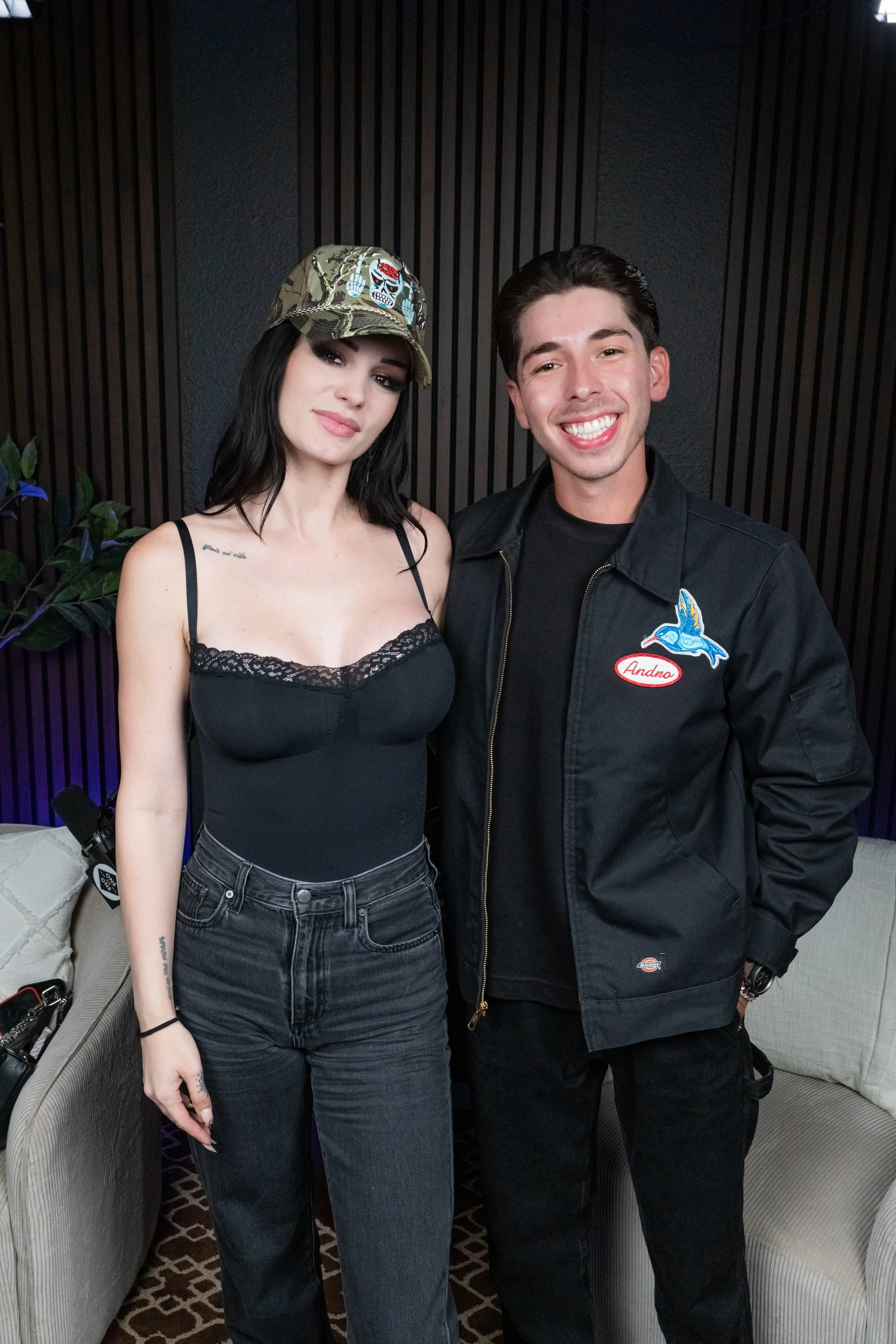
Surviving the Spotlight & Reclaiming Her Voice
A Conversation with Saraya
For years, the world has known her as Paige — the rebellious, pale-skinned anti-diva who helped redefine women’s wrestling inside WWE. She walked into arenas at 21 years old carrying the pressure of an entire division on her shoulders, becoming the youngest Divas Champion in company history and helping ignite a movement that would eventually change women’s wrestling forever.
But behind the championships, television appearances, viral headlines, and public persona was another story entirely.
In her conversation on One-on-One with Andro Mammo, Saraya opens up in a way audiences rarely see — reflecting on childhood trauma, fame, mental health, public humiliation, identity, and the difficult process of learning how to truly heal.
The result is not just a conversation about wrestling.
It’s a conversation about survival.
“You Don’t Realize What You’ve Been Through Until You Write It Down”
While discussing her memoir Hell in Boots, Saraya explains that writing the book forced her to confront experiences she had spent years avoiding.
“You don’t realize exactly what you go through in your life until you put it down on a piece of paper.”
Although millions of fans have watched her perform in front of packed arenas, she describes writing the book as more emotionally exposing than wrestling itself.
Inside the ring, she could play a character.
On the page, there was nowhere to hide.
She explains that performing as Paige gave her armor — confidence, toughness, rebellion. But the book required Saraya herself to speak honestly about pain she had spent years suppressing.
And rather than wanting sympathy, her goal was something far deeper:
To help people realize that surviving difficult experiences does not mean happiness is impossible.
The Story Behind the Persona
One of the most powerful parts of the conversation centers around how differently the public perceives her compared to who she actually is.
For years, audiences projected assumptions onto her — controversy, rebellion, recklessness — without understanding the experiences happening behind the scenes.
Saraya speaks candidly about how being thrust into the spotlight at such a young age intensified insecurity and anxiety. She recalls constantly feeling judged, criticized, and misunderstood while trying to navigate fame in real time.
Social media only amplified those feelings.
She describes how deleting apps from her phone became one of the healthiest things she could do for herself mentally, especially during difficult career transitions and moments of public criticism.
Yet despite everything, she eventually reached a turning point:
A moment where she stopped living for public approval.
The Moment That Nearly Broke Her
One of the heaviest moments in the interview comes when Saraya revisits the aftermath of her leaked private videos — a period she describes as one of the darkest times of her life.
She reveals that she reached a point where she contemplated ending her life.
Then came a phone call from her father.
Instead of judgment, shame, or disappointment, he met her with compassion.
“If you can change it, why are you stressing? If you can’t change it, why are you stressing?”
That perspective stayed with her forever.
It became one of the defining lessons of her life — not minimizing pain, but refusing to let shame define her future.
Looking back now, Saraya says she would not erase even the hardest chapters of her story because they shaped who she ultimately became.
Helping Change Women’s Wrestling Forever
Long before women were headlining WrestleManias, competing inside Elimination Chambers, or receiving the same opportunities as male wrestlers, Saraya and a generation of women fought for those moments behind the scenes.
During the interview, she recalls the frustration of constantly having women’s matches shortened, cut, or treated as less important.
That frustration eventually contributed to the viral #GiveDivasAChance movement — a turning point many fans now look back on as one of the catalysts for WWE’s women’s evolution.
Saraya reflects on how surreal it feels seeing how much the industry has changed since those early years:
Women main-eventing premium events
Longer match times
More creative freedom
Entire shows built around women performers
And while she acknowledges there is still progress to be made, she takes pride in knowing she helped open doors for a different generation of wrestlers.
“I’m the Happiest I’ve Ever Been”
Perhaps the most surprising part of the conversation is not the fame, the championships, or even the controversy.
It’s the peace.
Saraya explains that despite everything she has survived — childhood trauma, public scrutiny, career-ending injuries, mental health struggles, heartbreak, and reinvention — she now feels genuinely happy in a way she never had before.
Not performative happiness.
Real happiness.
The kind that comes from finally becoming comfortable with yourself.
That may ultimately be the biggest takeaway from the conversation.
Not that pain disappears.
But that healing is possible.
And sometimes the people who appear strongest on the outside are the ones fighting the hardest battles internally.
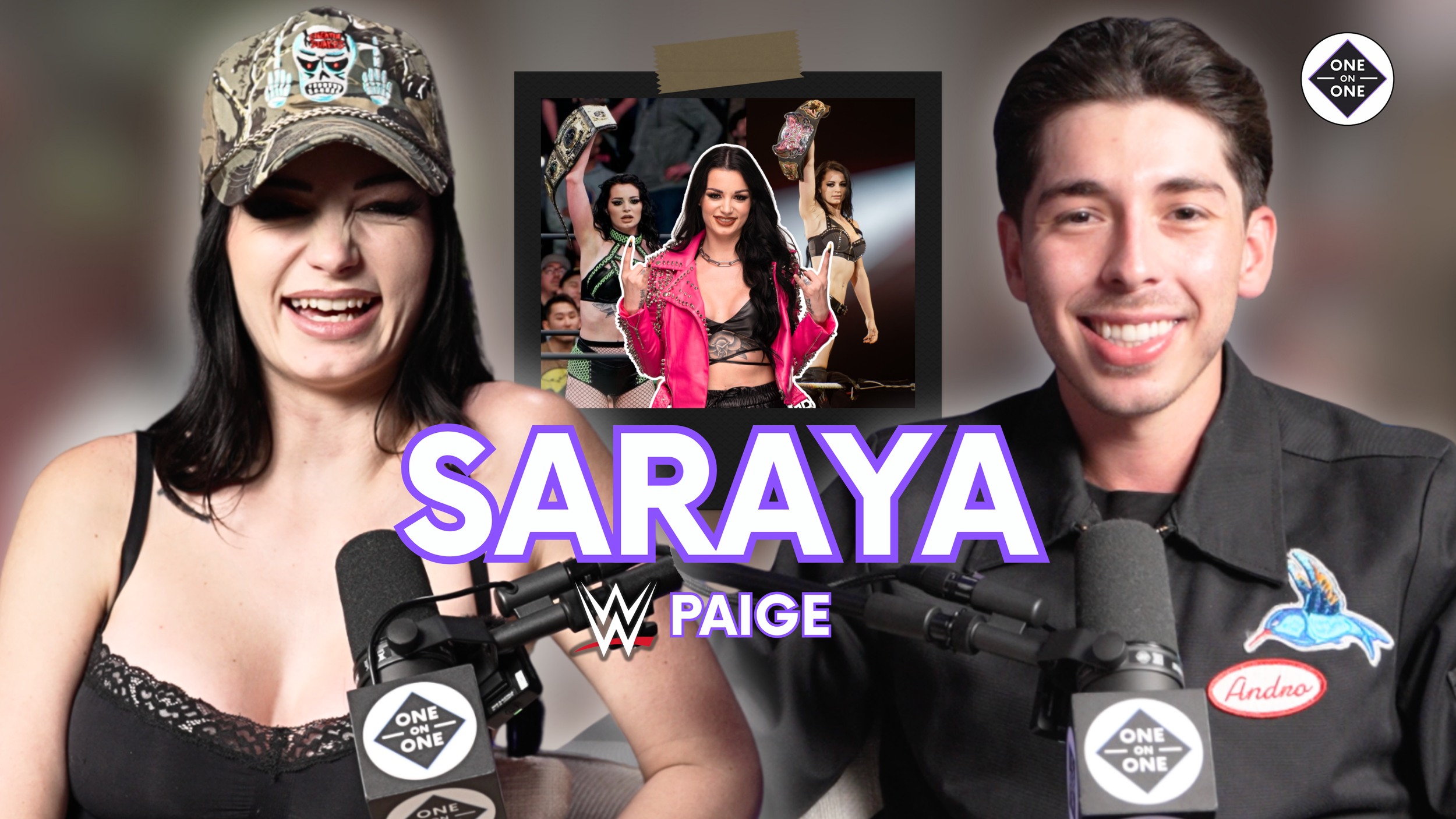
Watch the Full Conversation
In this deeply personal episode of One-on-One with Andro Mammo, Saraya reflects on:
growing up in a wrestling family
surviving trauma and public humiliation
redefining women’s wrestling
the pressures of fame and social media
mental health and healing
identity beyond the spotlight
why vulnerability became her greatest strength
The conversation is raw, emotional, funny, reflective, and ultimately inspiring.
Because beneath the headlines and championships is a woman who fought to reclaim her life — and is now using her story to help others do the same.